

Plant magick is one of the simplest ways to bring witchcraft into everyday life. Herbs, flowers, trees, seeds, roots, and even houseplants can become part of rituals, spells, seasonal practice, and quiet moments of connection with nature.
You don’t need a large garden or a cabinet full of rare herbs to begin. Start with one plant you already know, learn its traditional correspondences, and discover how it fits naturally into your practice.
Start With One Thing 🌿
Plant magick can take many forms. Choose the path that sounds most interesting to you right now.
🌱 Choose an Herb
Start with familiar plants such as Rosemary, Lavender, Basil, Sage, or Chamomile and learn the traditional magical correspondences associated with them.
🫖 Make a Magical Tea
Turn an ordinary cup of tea into a small ritual by choosing herbs whose symbolism matches your intention.
🕯️ Use Herbs in Spellwork
Add herbs to sachets, incense blends, ritual baths, candles, spell jars, oils, or other forms of magical practice.
📖 Build a Green Witch Grimoire
Keep notes on herbs, correspondences, recipes, seasonal observations, and plants you encounter in your own practice.

What Is Plant Magick?
Plant magick is the spiritual or magical use of plants, herbs, flowers, roots, trees, and other botanical materials in ritual and everyday practice. Different plants have gathered different symbolic associations through folklore, religion, traditional practice, and modern witchcraft.
A practitioner who works closely with plants might describe themselves as a Green Witch, plant witch, herbal witch, or sometimes a Hedge Witch, depending on the rest of their practice.
Plant magick can be as elaborate as making ritual oils and incense or as simple as growing Rosemary on a windowsill, drinking a cup of tea intentionally, or placing seasonal flowers on your altar.
Another everyday way to work with herbs is through Kitchen Witchcraft, where ordinary cooking, tea, spices, and household routines can become part of a magical practice.
Popular Magical Plants & Herbs
There are thousands of plants with folklore and magical associations. These familiar herbs are an easy place to begin.
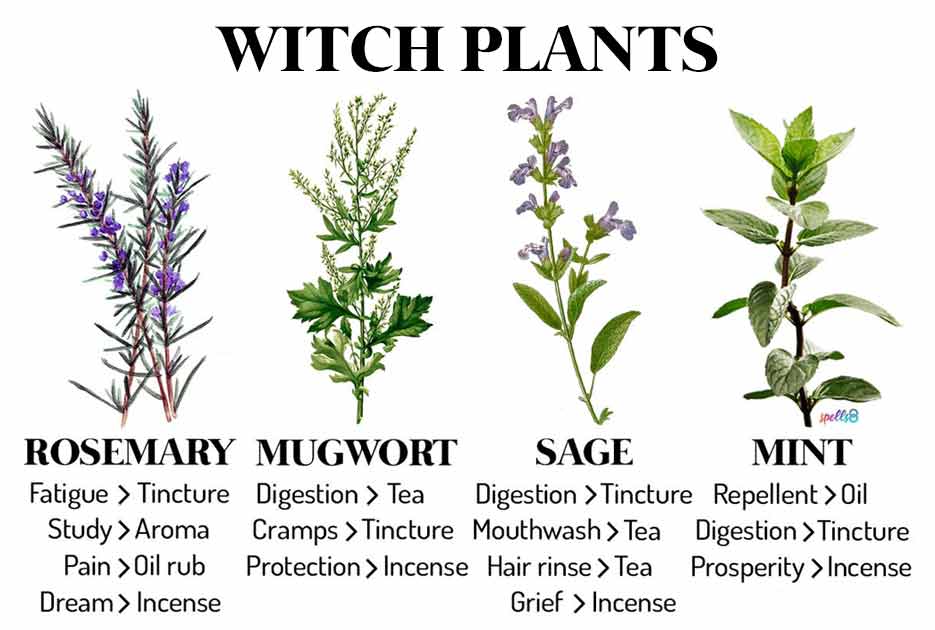
🌿 Rosemary
Traditional associations: protection, purification, remembrance, clarity, and blessing.
Rosemary is especially useful because it is easy to find and can be incorporated into incense, charms, cooking, altar work, and cleansing rituals.
💜 Lavender
Traditional associations: peace, purification, love, sleep, protection, and tranquility.
Dried Lavender works well in sachets, baths, incense blends, sleep-related rituals, and gentle spells centered on peace or affection.
🌿 Sage
Traditional associations: cleansing, protection, wisdom, purification, and longevity.
Garden Sage can be used in many magical practices, including incense, charms, ritual cooking, and protection work.
🌱 Basil
Traditional associations: abundance, prosperity, protection, love, and good fortune.
Basil is easy to grow in pots and can be used in prosperity rituals, kitchen witchcraft, petitions, and spells for good fortune.
🌙 Mugwort
Traditional associations: dreams, intuition, divination, protection, and lunar practice.
Mugwort appears frequently in modern witchcraft practices connected with dream work and divination, but it is also an herb that deserves extra attention to physical safety before use.
🍃 Peppermint
Traditional associations: vitality, purification, prosperity, healing symbolism, and mental clarity.
Peppermint can be incorporated into tea rituals, baths, sachets, altar offerings, or refreshing magical practices.
🌼 Chamomile
Traditional associations: calm, luck, prosperity, purification, rest, and gentle protection.
Chamomile fits naturally into tea rituals, baths, sleep-related practices, and simple spells centered on peace or good fortune.
🍃 Bay Leaf
Traditional associations: success, victory, wishes, protection, and divination.
Bay leaves are commonly used in written petitions, prosperity rituals, kitchen witchcraft, and symbolic release practices.
This is only a small sample. The Spells8 Green Witchcraft course explores many more magical plants, their traditional correspondences, and ways to work with them.
Choose Herbs by Intention
Sometimes you don’t know which herb you want — you only know what kind of intention you’re working with. Start with the purpose of your ritual and choose from there.
🛡️ Protection & Cleansing
Rosemary, Sage, Lavender, Bay, and other herbs are commonly associated with cleansing, boundaries, and protection.
They can be incorporated into charms, baths, floor washes, incense, altar work, or a spiritual cleansing practice.
💗 Love & Friendship
Rose, Lavender, Basil, Jasmine, and similar correspondences frequently appear in spells centered on affection, harmony, self-love, and relationships.
You can combine them with candles, petitions, sachets, or other forms of love magick.
💰 Prosperity & Success
Basil, Bay, Cinnamon, Mint, and other traditional correspondences are popular choices for abundance, success, and good-fortune work.
Use them in prosperity charms, petitions, candles, bowls, or spell jars.
🔮 Dreams & Divination
Mugwort, Lavender, Bay, and other plants are traditionally connected with dreams, intuition, psychic awareness, and divination.
They may be used alongside Tarot, dream journaling, meditation, or other divination methods.

Ways to Work With Plants in Magick 🌿
You don’t need a complicated ritual. Plants can become part of your practice in many simple ways.
🫖 Teas & Infusions
Choose food-safe herbs whose symbolism matches your intention and turn the act of preparing tea into a small ritual.
🛁 Ritual Baths
Herbs, flowers, salts, and other ingredients can be used symbolically in cleansing, relaxation, and intention-setting baths.
🕯️ Oils & Salves
Botanical oils can be incorporated into ritual preparation, candle dressing, altar work, and traditional herbal crafts.
💨 Incense & Smoke
Dried aromatic plants can be incorporated into incense blends and symbolic cleansing practices where smoke is appropriate and safe.
🧿 Sachets & Charm Bags
Dried herbs can be placed in small fabric pouches to create portable charms for protection, luck, love, travel, or another intention.
🫙 Spell Jars
Layer herbs with petitions, crystals, salts, or other symbolic ingredients to build a compact ritual around one clear intention.
Herbs can also be placed around a ritual circle, added to an altar, carried as talismans, used in witchy potions, or incorporated into your own seasonal rituals.
Don’t Have the Right Herb? Try a Substitution
You don’t need to buy a rare ingredient every time a spell calls for something you don’t have. In many forms of modern witchcraft, herbs with similar correspondences can be substituted when it makes practical and symbolic sense.

The most useful substitution is often the plant whose symbolism makes sense to you and whose physical use is safe for the ritual you’re performing.
Easy Plant Spell: Protection Charm Bag
If you’d like to turn what you’ve learned into a simple practice, try this small protection charm using Lavender and Sage.


Plant Magick: Easy Protection Plant Spell Bag
Make this protective spell bag to keep nearby when you feel the need for extra plant protection.
Ingredients
1 tablespoon Dry lavender flowers
1 tablespoon Dried and crushed sage
1 String-pull pouch in black or white
1 White candle
Directions
- Focus your full attention and awareness on your actions as you take a few deep breaths.
- Light the white candle on your altar or work table.
- Adding the sage to the pouch, say aloud or think to yourself: “Sacred herb, please keep me grounded and protected from negative energy.”
- Add the lavender and say: “Sacred flower, keep my mind clear, sharp, and free from fog.” Guide my thoughts and travels wherever I go, wherever I take you.”
- Press the pouch to your chest and say: “This protective charm will keep me safe from harm so that nothing can slow me down, make me sad, or make me ill.”
- Take a few minutes to meditate. Say a prayer to your Higher Beings or the Elements before blowing out (or snuffing) your candle.
From the Online Coven: White Sage vs. Garden Sage?
More Plant Spells & Charms ✨
- Safe Travels Protection Pouch
- Protection From Draining Energies
- Friendship Spell Bag
- Financial Health Pouch
Growing & Caring for Plants as a Practice 🌱
Green witchcraft doesn’t have to begin with spell ingredients. Simply caring for a living plant can become a slow, grounding spiritual practice.
Choose one houseplant, herb, tree, or garden plant and observe it throughout the year. Notice new growth, flowering, dormancy, changes in daylight, and how its needs shift with the seasons.

📓 Keep a Plant Journal
Record when new leaves appear, when flowers open, how often the plant needs water, and any seasonal changes you notice.
This can become part of your Book of Shadows or a separate Green Witch journal.
💧 Make Care Into Ritual
Watering, pruning, repotting, and checking the soil can become quiet moments of attention rather than chores.
You might say a short blessing, set an intention, or simply take a few slow breaths while caring for your plants.
If lunar timing is meaningful to you, you can also record the Moon phase alongside your gardening observations and see whether it becomes a useful part of your personal practice.
Wild Plant & Forest Magick 🌲
You don’t have to pick, harvest, or own a plant in order to work with the green world. Spending time among trees, watching seasonal changes, identifying local species, or simply walking through a park can become part of a nature-based spiritual practice.

Try taking a slow walk without headphones. Notice the shapes of leaves, the smell of the air, bird calls, bark textures, fungi, flowers, fallen seeds, and signs of seasonal change.
- Learn to identify a few common local trees or flowers.
- Photograph interesting plants instead of picking them.
- Collect fallen leaves where local rules allow.
- Press flowers or leaves from safe, permitted sources.
- Notice animal tracks, nests, insects, and other signs of the ecosystem around you.
- Return to the same place in different seasons and watch how it changes.
Plant & Herb Safety ⚠️
Magical plants are still real plants with real physical properties. A little practical knowledge keeps plant magick safer and more enjoyable.
- Identify plants correctly. Never eat, drink, burn, or apply an unidentified plant to your body.
- Don’t assume “natural” means harmless. Some plants are poisonous, irritating, allergenic, or dangerous in particular amounts.
- Be careful with teas and internal use. A plant that is appropriate for ritual symbolism may not be safe to consume.
- Check medication and health interactions. Some herbs interact with medicines or may be unsuitable during pregnancy, breastfeeding, or certain medical conditions.
- Think about pets. Plants and essential oils that are harmless to adults may be unsafe for cats, dogs, birds, or other animals.
- Use smoke carefully. Incense and burning herbs can irritate lungs and should be used with ventilation and fire safety in mind.
- Forage responsibly. Follow local rules, avoid protected species, don’t harvest from polluted areas, and never take more than you need.
Traditional herbal folklore and spiritual correspondences can be meaningful parts of witchcraft, but they are not substitutes for qualified medical advice or treatment.
Go Deeper Into Green Witchcraft
Once you’ve started experimenting with a few plants, these Spells8 resources can help you build a deeper practice.
Build a reference section for herbs, plants, recipes, and green witch correspondences inside your own grimoire.
🌿 Learn Herbal Witchcraft
Explore the foundations of working magically with herbs and plants through the Spells8 lessons and courses.
From the Online Coven: explore favorite flowers, the Tea & Infusions challenge, or the community’s Witch Herb Names list.
Plant Magick FAQ
Do I need a garden to practice plant magick?
No. A windowsill herb, houseplant, dried kitchen herb, cup of tea, flower from a florist, or even regular walks through a local park can become part of a plant-based practice.
What is the easiest herb for a beginner witch?
There is no single best choice, but Rosemary, Basil, Lavender, Mint, Bay, and Chamomile are all familiar plants with a wide range of traditional magical correspondences.
Can I use kitchen herbs in spells?
Yes. Many common kitchen herbs also have long histories in folklore and magical practice. Using what you already have can make witchcraft more accessible and encourages you to learn one plant deeply instead of constantly buying new ingredients.
What if I don’t have the herb a spell calls for?
You can often choose a safer or more available plant with similar symbolism. The Herbal Substitutions guide can help you find alternatives.
Do herbs have to be dried?
No. Depending on the practice, herbs may be fresh, dried, grown in pots, used in food, steeped in water, displayed on an altar, or simply observed outdoors. Choose a form that suits both your intention and the plant’s physical properties.
Is plant magick the same as herbal medicine?
No. Plant magick focuses on symbolism, spirituality, ritual, folklore, and magical correspondences. Herbal medicine is a separate subject involving the physical effects of plants on the body and requires appropriate safety knowledge.
You don’t need to know every magical herb before you begin. Learn one plant, observe it, read its folklore, try one simple practice, and let your relationship with the green world grow naturally from there.





I’d love to know more herbalism spells, these ones were good, I haven’t tried all of them yet.
Thanks!
So informative, I love using different plants in spells, especially Lavender!
I completely stumbled across this website by accident when looking for ways to enhance my plant growth. This is exactly the information I’ve been looking for, and I cannot wait to delve into this website more.! as a new practitioner in green magic this is wonderful thank you so much